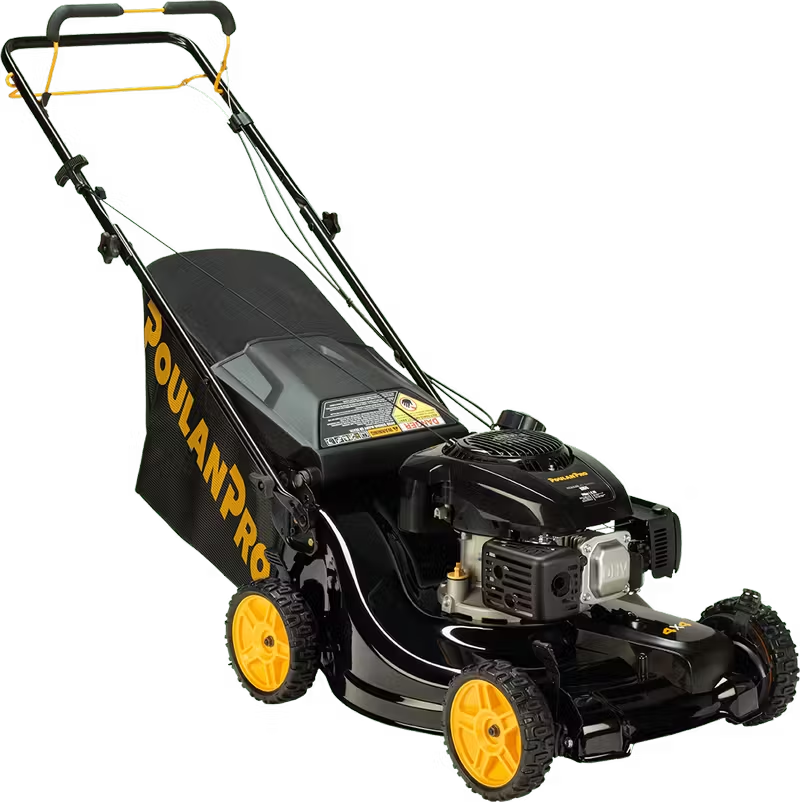
The Environmental Impact of Gas-Powered Equipment in Landfills — And Why Responsible Recycling Matters

Gas-powered lawn equipment has helped homeowners and professionals maintain properties efficiently for decades.
From lawn mowers to snow blowers, trimmers to pressure washers — small engines are a practical part of everyday life across America.
But what happens when that equipment reaches the end of its life?
Every year, millions of small engines are discarded in the United States — and far too many end up in landfills.
The environmental impact of improper disposal is significant. And completely preventable.
How Many Lawn Mowers and Small Engines Are Discarded Each Year?
The United States has an estimated:
- 100+ million gas-powered lawn mowers currently in use
- Tens of millions of other small gas-powered engines in circulation
Industry estimates suggest that approximately 8–10 million lawn mowers are discarded each year, along with millions of other small engines.
Many of these machines are thrown away with:
- Gasoline still in the tank
- Oil still in the crankcase
- Batteries attached
- Metal and aluminum components intact
That means millions of gallons of fuel and oil are entering the waste stream annually.
The Hidden Risk of Fuel and Oil in Landfills
Small engines are not hazardous when used properly.
The problem arises when they are discarded improperly.
Gasoline contains chemicals such as:
- Benzene
- Toluene
- Xylene
These compounds can pose contamination risks when released into soil or groundwater systems.
The EPA reports:
- One gallon of used motor oil can contaminate up to one million gallons of water.
Even small amounts of residual oil left inside discarded equipment can contribute to long-term environmental stress.
Modern landfills are engineered to manage waste — but they are not designed to process millions of small engines filled with petroleum products.
Responsible recycling prevents these materials from ever becoming a landfill issue.

The Material Waste Problem
A standard push mower weighs between 60–90 pounds.
That’s mostly:
- Steel
- Aluminum
- Copper
- Plastic
- Rubber
Multiply that by millions of units per year.
We’re talking about hundreds of millions of pounds of reusable material being buried instead of recovered.
Recycling allows these materials to be:
- Reused in manufacturing
- Repurposed into new products
- Refurbished into functional equipment
- Safely dismantled and processed
This reduces strain on natural resources and keeps valuable materials in circulation.
A Growing Transition: What Happens Next?
As homeowners upgrade equipment or transition between properties, older machines often sit unused in garages — or get thrown away during moves and cleanouts.
The coming years will likely see millions more units reaching end-of-life.
This isn’t about replacing gas equipment.
It’s about ensuring that when equipment is no longer needed, it is handled responsibly.
Recycling protects:
- Soil
- Water
- Materials
- Future generations
And it’s far easier than most people realize.
What Responsible Small Engine Recycling Looks Like
When equipment is properly recycled:
- Fuel and oil are safely drained and processed
- Batteries are removed and handled appropriately
- Metals are separated and reclaimed
- Usable parts are repurposed
- Functional units may even be restored for continued use
Nothing is wasted unnecessarily.
And nothing harmful is left to leak.

A Simple Choice That Makes a Big Impact
Most people don’t intentionally harm the environment.
They simply don’t realize the impact of disposal decisions.
Throwing away a mower feels small.
But multiplied by millions of households, it becomes a measurable environmental burden.
Recycling your equipment ensures:
- Hazardous fluids are properly managed
- Valuable metals are reused
- Landfill space is preserved
- Environmental risk is reduced
It is a responsible final step in the life of your equipment.
Ready to Recycle Your Equipment?
If you have a lawn mower, snow blower, trimmer, or other small engine that is no longer needed, we make recycling simple.
👉 Submit your equipment through our online form today:
We provide convenient pickup and responsible processing nationwide.
No draining required. No complicated steps. We handle it for you.
Don’t Have Equipment to Recycle?
You can still support responsible small engine recycling.
If you believe in reducing landfill waste and promoting reuse, you may make an optional contribution to support our environmental efforts.
👉 Support the Recycling Mission Here:
OPTIONAL ENVIORMENTAL CONTRIBUTION

Completely voluntary. Always appreciated. Never required.
Every Machine Matters
Recycling one mower may feel small.
But when thousands choose responsible disposal, the impact compounds.
Cleaner landfills.
Safer waste systems.
More materials reused.
It starts with one decision.
And we’re here to make it easy.