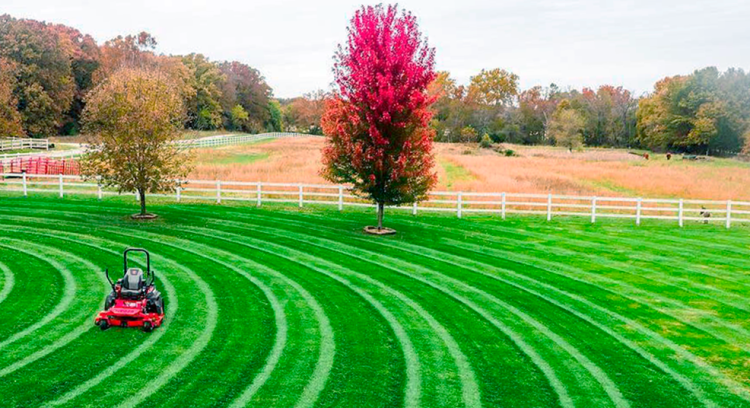
Maximizing Your Lawn’s Potential: The Benefits of Automated Sprinkler Systems

A lush, green lawn is a source of pride for homeowners, but achieving and maintaining that vibrant look can be a challenge, especially when it comes to watering. Fortunately, modern technology offers a solution in the form of automated sprinkler systems. These systems offer a host of benefits that not only simplify lawn care but also promote healthier, more beautiful grass. Let’s explore the advantages of investing in an automated sprinkler system for your lawn.

1. Efficient Watering:

Automated sprinkler systems are designed to deliver water precisely where and when it’s needed. By programming the system to run at optimal times and durations, you can ensure that your lawn receives the right amount of water without wastage. This efficiency not only promotes healthier grass but also conserves water, making it an environmentally friendly choice.

2. Consistent Coverage:

One of the challenges of manual watering is achieving consistent coverage across the entire lawn. Automated sprinkler systems solve this problem by distributing water evenly through strategically placed sprinkler heads. This means every inch of your lawn receives the moisture it needs to thrive, minimizing dry patches and ensuring uniform growth.

3. Time-Saving Convenience:

Gone are the days of dragging hoses and moving sprinklers around the yard. With an automated sprinkler system, you can set it and forget it. Once programmed, the system will take care of watering on its own, freeing up your time for other tasks or leisure activities. Whether you’re at home or away, you can trust that your lawn is being watered consistently and efficiently.

4. Customizable Programming:

Modern automated sprinkler systems offer advanced programming features that allow you to tailor watering schedules to your lawn’s specific needs. Factors such as soil type, sun exposure, and plant types can all influence watering requirements, and with a programmable system, you can adjust settings accordingly. Some systems even include weather sensors that automatically adjust watering schedules based on current conditions, ensuring optimal moisture levels year-round.

5. Water Conservation:

Water is a precious resource, and automated sprinkler systems help ensure it’s used wisely. By delivering water directly to the root zone and minimizing runoff, these systems maximize efficiency and minimize waste. Additionally, features such as rain sensors can detect when natural precipitation occurs and adjust watering schedules accordingly, further reducing water usage.

6. Improved Lawn Health:

Proper watering is essential for maintaining a healthy lawn, and automated sprinkler systems excel in this area. Consistent moisture levels promote deep root growth, drought tolerance, and resistance to disease and pests. With a well-watered lawn, you’ll enjoy thicker, greener grass and fewer issues with weeds and bare patches.

7. Enhanced Property Value:

A well-maintained lawn adds curb appeal and value to your property. An automated sprinkler system not only keeps your lawn looking its best but also signals to potential buyers that the property is well cared for. Whether you’re planning to sell in the future or simply want to enjoy a beautiful outdoor space, investing in an automated sprinkler system is a smart decision.

Choosing Rain Bird for Your Irrigation Needs:

When it comes to selecting a company to install your automated sprinkler system, Rain Bird stands out as a trusted choice. With decades of experience in the industry, Rain Bird is known for its high-quality products and reliable performance. Their innovative sprinkler systems are designed to deliver optimal water distribution while maximizing efficiency and water conservation.

In conclusion, automated sprinkler systems offer numerous benefits for homeowners looking to maintain a healthy, attractive lawn with minimal effort. From efficient watering and consistent coverage to customizable programming and water conservation, these systems provide the tools you need to maximize your lawn’s potential. Consider investing in an automated sprinkler system today, and with Rain Bird as your partner, you’ll enjoy a lush, vibrant lawn for years to come.

Things to Consider Before Buying a Riding Lawn Mower

Are you ready to level up your lawn care game? Riding mowers can transform the chore of mowing into an enjoyable experience. However, before you rev up and ride off into the sunset, let’s explore the crucial factors to consider before investing in your new trusty steed.

  1. Lawn Size and Terrain: Assess your lawn’s size and terrain. For larger areas (an acre or more), a mower with a wider cutting deck might be ideal. For hilly or uneven terrains, look for a mower with sturdy traction and stability.
  2. Mower Type: There are various types of riding mowers: lawn tractors, zero-turn mowers, and rear-engine riders. Each has its strengths. Lawn tractors are versatile, zero-turn mowers offer maneuverability, and rear-engine riders suit smaller areas. Choose based on your specific needs.
  3. Engine Power and Fuel Type: Consider the engine power required for your lawn size and the type of grass you’ll be cutting. Gas-powered mowers are common, but electric or battery-operated options are becoming popular due to their eco-friendliness.
  4. Cutting Deck Size and Attachments: The cutting deck size determines the width of grass cut in one pass. Additionally, check if the mower allows attachments like baggers, mulchers, or snowplows for versatile use throughout the seasons.
  5. Comfort and Ergonomics: Test out the mower’s seat comfort, ease of controls, and visibility. Comfort matters, especially for longer mowing sessions.
  6. Maintenance and Warranty: Look into maintenance requirements and warranties. A mower that’s easy to maintain and comes with good support can save you headaches down the line.
  7. Budget and Long-Term Costs: Set a realistic budget and consider long-term costs, including fuel, maintenance, and potential repairs. Sometimes, spending a bit more upfront can save you in the long run.
  8. Reviews and Recommendations: Research! Read reviews, ask friends or neighbors with riding mowers about their experiences, and gather insights before making a decision.

Remember, finding the perfect riding mower involves balancing your lawn’s needs, your preferences, and practical considerations. By weighing these factors thoughtfully, you’ll be well on your way to finding the right riding mower to cruise through your lawn care tasks with ease and satisfaction. Happy mowing!

The Difference Between a Push Mower and a Self-Propelled Mower

A push mower, also known as a manual lawn mower, is a type of lawn mower that is pushed forward by the user. It is propelled by the physical effort of the person using it, rather than by an external power source. Push mowers are typically smaller and more lightweight than other types of lawn mowers, making them easier to maneuver around the lawn. They are also generally less expensive than self-propelled mowers.

A self-propelled lawn mower, on the other hand, is powered by an internal combustion engine or an electric motor and is capable of moving forward on its own. The user controls the speed and direction of the mower by a set of handles, and the mower moves forward under its own power. Self-propelled mowers are typically larger and heavier than push mowers, and they are more expensive as well. However, they are also easier to use, as the user does not have to exert as much physical effort to push the mower around the lawn.

In general, push mowers are best for small lawns with relatively flat terrain, while self-propelled mowers are better suited for larger lawns or yards with hills or uneven terrain. Both types of mowers have their own set of advantages and disadvantages, and the best choice for you will depend on your specific needs and preferences.

Should I Change My Lawn Mowing Pattern?

Mowing your lawn is an essential process in order to maintain a healthy good looking lawn. When mowing the lawn yourself every week or every other week, depending on the growth pace of your grass and whether or not fertilizer is part of the equation, a question may come up… Should you vary your mowing pattern every time you mow your lawn? 

Yes! Why, you ask? Because you don’t want to train your grass to lean one way by mowing the lawn in the same direction again and again. Especially if your lawn mower is heavy; so you can avoid gouging your lawn. 

Varying the direction in which you mow your lawn can help your grass stems grow straight up and stand tall. Not to mention, if you go over your lawn in the same direction every time, it could lead to some tracks in the soil which could cause your soil particles to get tightly packed, making it difficult for air and water to reach the roots, which is known as soil compaction.

So, remember to switch up the mowing directions often, and sharpen your mowers blades. Happy mowing!

How To Store Your Lawn Mower For Winter

You probably heard about the importance of keeping your lawn mower stored safely during the cold season. But what exactly should you do in order to protect your mower while in storage? First thing you should know is that if you leave the mower outside during the course of winter, it will probably rust, which is an expensive mistake that can be easily avoided! Leaving your mower out in the cold can also cause other internal issues making it even more difficult and sometimes impossible to start once we hit Spring. Here are some simple tips to help you keep your mower safe during Winter.

Clean the Mower

Brush the leaves, grass and mud off your mower before storing it. In doing so, you’ll prevent key parts of the mower  from getting clogged up, such as the wheels. It’s not the most appealing thing to do, but can you imagine how much harder it would be to clean 3-4 months old mud and grass?

Drain the Gas

Electric and cordless mower owners can skip this step! Gas starts degrading in about a month or 30 days, which is very little time and not even the whole duration of winter! As a result, the mower’s engine might get clogged and might not even start. The safest option is to drain the mower’s tank. Another alternative is you can use a fuel stabilizer to protect your mower till it’s ready to be used again

Remove the Battery

If it is a riding lawn mower you should remove the battery before storing. Keeping your mower’s battery safe is important, because sometimes buying a new one can be very costly. A smart move is to remove the battery from your mower and store it in a dry cool place. Batteries don’t sit well in any environment that is damp, hot or too cold.

Choose a Storage Spot

There are things you need to consider, when choosing a spot to store your mower in. First and foremost, keep your mower away from any heat appliances and active devices because it could be hazardous. Indoor storage is the optimum choice, such as the garden shed or the garage. If you don’t have an indoor storage space, then the best way to store it safely outside is to use a water-resistant tarpaulin cover.

Clear Out Your Garage and Recycle Today:
If you’re looking to recycle your old mower and make room for a new one, we’re here to help! Our lawn mower recycling program ensures that your equipment is disposed of responsibly and sustainably. Click the link below to fill out our form and get started today.

Lawn Mower Recycle Pick-Up Request Form!

First 3 Things To Check If My Lawn Mower Won’t Start

Are you having trouble starting your lawn mower, and have no idea why? No worries, we’ve got you covered! We’ve prepared a guide for the first 3 things you need to check on, if your lawn mower is giving you a hard time.

Not to point out the obvious, but the first thing you should do is make sure your mower has fresh gas. If your mower’s tank still contains last season’s fuel, you will need to drain it and fill the tank with fresh fuel. Now that we’ve gotten that out of the way, here are the first 3 things you should check on if your mower won’t start:

SPARK PLUG:

Examine the spark plug, it could be in need of a clean-up from all the debris, or it might be loose or disconnected altogether. If it’s the latter, you’ll need to tighten or reattach it. You will need the proper spark plug socket in order to remove or tighten it. Spark plug sockets come in two sizes: 5/8 inches and 13/16 inches. Most spark plug sockets have a rubber insert that holds the plug tightly in place. You may also need a universal joint if your spark plugs are hard to reach.

AIR FILTER:

Check the air filter, it might need a clean-up or to be replaced with a new one. The air filter is usually located behind a flat plastic piece that can be easily removed by hand. You can find these at your local hardware store or lawn mower repair shop. You can also buy them online.


FUEL LINE:

The third possible issue might be that the engine isn’t getting any fuel, and if this is the case, you can try getting the gas to flow by tapping the carburetor on the side. If that doesn’t help, you might want to consider getting a brand new fuel filter or fuel line. Check this by removing the fuel line at the carburetor. Gas should run out from the line once it’s removed. If gas isn’t coming out of the fuel line, remove the fuel line ahead of the fuel filter inlet. If gas flows, the fuel filter is clogged.

If none of these fix the issue you might want to look into getting the carburetor cleaned or even replaced. If the mower still will not start then it might be time to recycle it.

How Do I Keep My Lawn Healthy?

Having a lush green lawn is the ultimate goal, and it’s not necessarily hard to achieve! Here are some tips for how to take better care of your lawn.

Mowing & Edging

It is best to remove only a third of the total grass length when moving the lawn, to avoid scalping grass, which is cutting it too short. How often you should mow your lawn can be determined by the season and the weather conditions!

Sharpen Mower Blade

If you want to get the absolute best results when mowing, make sure your mower blades are sharpened. 

Change The Mowing Pattern

When you’re mowing your lawn, avoid mowing in the same direction or pattern every time. That way the grass will grow straight and tall.

Aeriate

Aeration is when you create small holes in the soil at certain depths, which is essential for the soil to get the nutrients it needs to grow; as it makes it easier for the root of the grass to have better access to air and water. You can aerate using a garden fork, or specific aeration tools. 

Reseed Lawns

If your lawn is appearing to be a little thin in some areas, no worries! That can happen for many reasons, what you can do is seed over the area to fill it and lush it up.

Should I Mow My Own Lawn Or Hire A Professional Lawn Care Service?

If you’re thinking about your lawn, the question probably isn’t about whether you want it to be radiantly green and healthy, but more so about how you will achieve that goal! When it comes down to it, there are two options; you could either go DIY and mow your own lawn or hire a professional lawn care service. To be fair, both options have their pros and their cons!

Reasons To Hire A Service:

If you can afford it and are short on time, then it makes more sense to hire someone reliable. In most cases it is much easier for a lawn company to take care of your lawn than it is for you. Saving you both the time and the effort.

A big reason to hire a professional lawn care service is consistency! They will have a set schedule for your lawn to be mowed. Sometimes weekly or sometimes twice a month.

Mowers aren’t cheap and they need attention. They would be an investment similar to major appliances, such as a dryer or a refrigerator. If you are not mower-savvy and are not familiar with how to service a mower such as doing maintenance on the mower by changing the oil, sharpening the blades, and tuning it up every year, then you’ll need to learn how, or pay someone else to do it. If this does not sound good to you then it might be a good ida to hire a service to maintain your lawn.

Green Grass

Reasons To Mow Your Own Lawn

For some people, mowing the lawn is one of those weekly tasks that they can actually enjoy. It can be “therapeutic”. Just the repetitive movement of mowing and the perfect crisp lines that you create can help slip you into a calmer state of mind. Not to mention taking in the soothing smell of freshly cut grass after, knowing you made that happen!

Hiring a lawn mower service can add up over time, costing a lot of money in the long run. So really by mowing your lawn you could be saving money in the longterm.

Knowing your yard; Mowing your lawn regularly gives you a chance to really get to know your yard, in the sense of finding out which parts of your lawn need special attention and care.

Lawn Mower In Grass

Should I Use My Lawn Mower To Pick Up Leaves In The Fall?

Raking leaves during Fall can be a back breaking task, especially if you do it by hand. Bending over to pick up the leaves and then placing them into a bag can be a pain. If you own a riding lawn mower, it can help ease your leaf removal process. There are certain types of attachments that may be needed with most riding lawn mowers in order to help you  pick up leaves as you ride across your lawn. It is nice to use these attachments while you mow the grass, making it so you can both cut the yard and pick up leaves at the same time. 

Bagger Systems

Most riding lawn mowers and push lawn mowers have an optional bagger attachment that you can use when cutting the yard. Most push mowers include the bag while riding mowers do not (and you have to buy them as an add on). The bag attaches and detaches from the rear of a lawn mower. You can choose to attach it when you want to collect grass clippings or leaves during the Fall. The grass cut by the mower deck of your mower is blown through the discharge chute into the bagger. A bagger will also collect any material or debris your lawn mower mows over. So if your yard is covered with leaves, this is a great way to clean them up without bending over to pick up leaves manually.

Tractor Leaf Bags

Another leaf collection attachment you can use with your riding lawn mower is a leaf bag. This bagger is pretty much the same as the bagger system previously mentioned; however, it is much larger than your basic bagger system.  It is nice to have if your yard is large so that you can pick up more leaves without having to empty the bags as often.

Lawn Sweepers

A lawn sweeper hooks up to the rear of the tractor, acting as a tow-behind attachment that sweeps the leaves off the grass. Rotating bristles throw any debris on your lawn into the sweepers bin area. If you only want to pick up leaves without mowing the lawn, a lawn sweeper is a very useful attachment to use. You do not need to engage the blade while going over the leaves (as you do with a bagger system). The sweeper will pick up the leaves without chopping them up. Be sure to check the lawn sweeper owner’s manual to make sure it is compatible with your type/ brand of riding lawn mower.

Mulching

Sometimes if you do not have too many leaves in your yard you are able to just cut over them without having to bag them up. This method will create a nutrient-rich mulch material that will fall between the blades of grass. Because the pieces are so tiny, your lawn will appear to look as though you picked up your leaves. If the layer of leaves on your lawn is too thick, don’t mulch. This will cause too much mulch left on your lawn and that excess mulch will suffocate/ kill  the grass. In order to mulch with your riding lawn mower or push lawn mower, remove the rear bagger and cover the side discharge chute with a mulch cover flap.